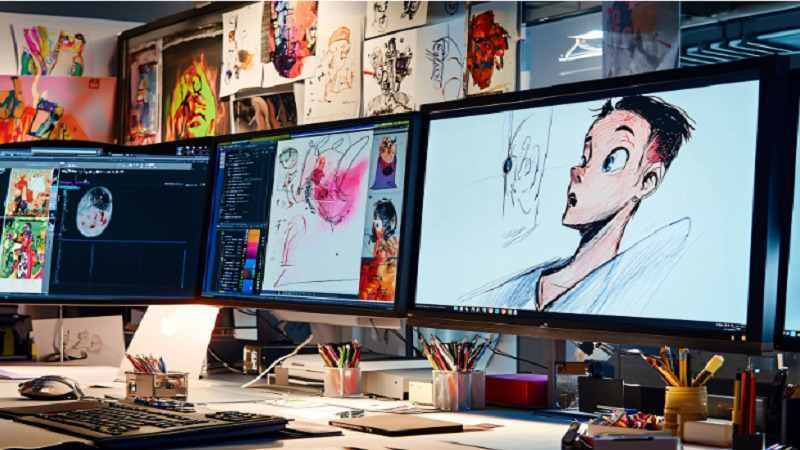
In an era where our attention spans are often compared to those of goldfish, the ability to stop a thumb from scrolling is a superpower. We live in a world saturated with static images and endless blocks of text. While a picture might be worth a thousand words, a moving image is worth a million. Motion commands attention. It taps into a primal part of our psychology—the part designed to notice movement in our periphery—making it one of the most effective tools for anyone trying to share an idea, sell a product, or tell a story.
Transitioning from static designs to dynamic content doesn’t have to be a technical nightmare involving complex software and years of training. For many small business owners, educators, and social media managers, the barrier to entry has traditionally been too high. However, the democratization of design tools has changed the landscape entirely. By using an intuitive animation maker, creators can now breathe life into their characters and concepts with just a few clicks. This shift from static to cinematic allows for a more personal connection with the audience, making the information not just seen, but felt.
![A person sitting at a bright, modern desk using a laptop to design colorful motion graphics, with a cup of coffee and a notebook nearby.]
Why Motion Matters in Digital Communication
Why do we react so strongly to movement? Beyond the psychological “startle response,” motion allows for better information retention. When we see a character gesture or a graph grow in real-time, our brains process that data as an experience rather than a set of facts. This is why “explainer videos” have become the gold standard for software companies and educators alike.
Motion also helps in establishing brand personality. A quick, bouncy animation might convey a sense of fun and approachability, while a slow, elegant fade suggests luxury and sophistication. It’s a silent language that speaks volumes about who you are before a single word is read.
Breaking the “Complexity” Myth
Many people shy away from motion because they imagine rows of complicated timelines and mathematical keyframes. In reality, the modern creative process is more about “acting” and “directing.” You don’t need to be a coder; you just need to have a vision. When you simplify the technical side, you free up mental space for the creative side—which is where the real magic happens.
Practical Ways to Use Animation Today
If you’re wondering where to start, you don’t need to create a feature-length film. Some of the most effective uses of motion are the smallest.
1. Social Media Interaction
Static posts are easily ignored. A simple animated character sharing a tip of the day or a moving background behind a quote can increase engagement rates significantly. On platforms like Instagram and TikTok, movement is the currency of the algorithm.
2. Educational Content
If you are a teacher or a corporate trainer, animation can simplify the complex. Instead of showing a static diagram of a water cycle or a sales funnel, show the movement. It provides a visual “path” for the viewer’s eyes to follow, ensuring they don’t get lost in the details.
3. Personal Branding
Adding a touch of motion to your LinkedIn profile or your personal website’s landing page sets you apart. It shows a level of technical polish and a commitment to modern communication standards that static images simply can’t match.
![An artist’s workspace featuring a tablet displaying a storyboard for a short animated sequence, surrounded by sketches and colorful markers.]
The Secret Sauce: Timing and Personality
The difference between a “robotic” animation and one that feels human lies in the nuances. Professional animators talk about “squash and stretch”—the idea that objects have weight and flexibility. Even if you’re using simplified tools, you can apply these principles by thinking about how a character would actually move.
- Anticipation: Before a character jumps, they crouch down. This tiny movement tells the viewer’s brain what is about to happen, making the action feel more satisfying.
- Follow-through: When a character stops moving, their hair or clothes might keep moving for a split second. This adds realism and “soul” to the design.
By focusing on these small details, your content moves from looking like a “digital puppet” to looking like a living story.
From Concept to Creation: A Step-by-Step Approach
When you’re ready to start, don’t just dive into the software. The best creators always start with a plan.
- The Hook: What is the one thing you want people to remember? Start there.
- The Script: Even if there is no talking, write down what happens. “The character walks in, looks surprised, and points to the link.”
- The Design: Choose colors and styles that match your brand. Consistency is key to building trust with your audience.
- The Movement: This is where you add the personality. Use movement to emphasize the most important parts of your message.
![A close-up of a smartphone screen showing a vibrant social media story with animated text and a moving character, held by a person in a busy cafe.]
Overcoming the Fear of the Blank Canvas
The hardest part of any creative project is the beginning. We often look at professional studios and think, “I could never do that.” But the truth is, the most viral content on the internet today isn’t the most high-budget; it’s the most authentic.
People crave human connection. If your animation feels “perfect,” it can sometimes feel cold. Don’t be afraid of a little imperfection. A character that looks a bit quirky or a movement that is slightly exaggerated can often be more charming and memorable than a polished corporate presentation.
Pro Tip: Audio is Half the Experience
Never underestimate the power of sound. A simple “pop” sound when a text bubble appears or a light background track can double the perceived quality of your animation. Sound provides the sensory “texture” that makes the visual movement feel grounded in reality.
The Future is Moving
We are moving toward a web that is increasingly interactive and fluid. Static web pages are becoming “living” documents. As AR (Augmented Reality) and VR (Virtual Reality) continue to grow, the skills you learn today by experimenting with simple motion graphics will be the foundation for how we communicate in the next decade.
By embracing these tools now, you aren’t just following a trend; you are future-proofing your ability to tell stories. Whether you are helping a child learn to read, helping a customer understand a product, or just trying to make your friends laugh on social media, motion gives you a voice that carries further.
The tools are ready, the platforms are waiting, and the audience is hungry for something different. All that’s missing is your unique perspective. It’s time to stop thinking in snapshots and start thinking in sequences. When you give your ideas the freedom to move, you’ll be surprised at how quickly they take flight.
Every great storyteller knows that the best way to predict the future is to create it. By adding motion to your creative toolkit, you’re not just making graphics—you’re making memories. So, take that first step, experiment with a few frames, and watch as your message finally gets the attention it deserves.